Search Vacation Rentals

Check In Date
Check Out Date
Adults
Children
Types
Bedrooms
Bathrooms

Maya Ruins

"Before creation there were no men, no animals, birds, fish, crabs, trees, stones, holes, canyons, beach nor rattan and the face of the earth did not manifest itself, the sea was suspended and there was nothing that made a sound in the sky. . ." Popol Vuh

The timeless Maya, one of history's most captivating civilizations, lived in the areas that today encompass Belize, El Salvador, Guatemala, Honduras and southeast Mexico: The "Mundo Maya".

Akumal and the Riviera Maya make an excellent, centrally located, home base for exploring the archaeological sites of Mexicoand northern Belize. From Akumal an easy day trip can take you to Tulum, Coba and the famous Chichen Itza. For those of you lucky enough to have the time venture out to Uxmal, Palenque, or Kohunlich. These are enchanting sites that will leave long lasting memories.

Facilities at most sites are excellent. The larger sites generally have cafeterias and souvenir shops. All have nice bathroom facilities. Chichen Itza and Uxmal both have small museums and auditorium. If you arrive early, skip the museum and see the site first before the heat is too uncomfortable.
Sites are open between 8am and 5pm, with a sound and light show in the evening at both Chichen Itza and Uxmal (in Spanish at 7pm and English at 9pm). We recommend arriving early or late afternoon visit to avoid the crowds and the heat. The admission fee is around $4 per person with an additional fee for the sound and light show. Some sites are still free on Sundays.

"Mundo Maya", an outreach organization created by the Mexican federal government, strives to preserve the incredible natural beauty of the region and rich cultural heritage of today's modern Maya as well as improve their standard of living and opportunities for education, through the creation of low impact sustainable tourism developments. Today the Maya are a living race. Warm and friendly people who have maintained their traditions, medicinal secrets and artistic history. We invite you to explore the Mundo Maya. Wander down dusty roads and uncover the many secrets of a land that will fill your senses.

Tulum


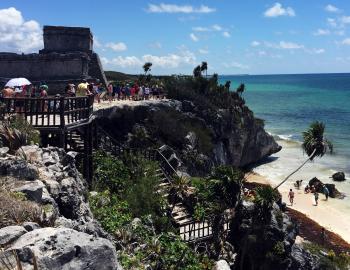
Tulum, these cliff-side ruins create a dramatic vision, keeping quite watch over the white sandy beaches and blue Caribbean Sea below. The name "Tulum" comes from the Yucatecan word for fence, and was given to the site in recent times because of the wall surrounding it. It is likely that the city's original name was "Zama" or "place of the dawn". This is an ideal name for the city. Sunrise in the eastern horizon over the ancient city is an unforgettable vision.

Tulum is the only walled city the Maya ever built on the Caribbean coast. Unique among other Mayan cities, Tulum was still a thriving trading community when first visited by the Spanish. Spanish sailors were very impressed with Tulum and reported it to be as big as Seville.

• Tulum Ruins are located 15 miles south of Akumal and are open everyday, 8:00 A.M. to 5:00 P.M.
• Bilingual guides are available near the entrance to the ruins. They are very knowledgeable and definitely enrich any visit to the ruins.
• The beaches of Tulum are spectacular!
Sandy beaches, surf and an eclectic mix of people make them great for
playing in the waves, laying in the sun, Frisbee and a pick up game of hackysack.

Ek Balam


Ek Balam

Ek Balam is the most recent archeological site to be opened to the public in the Yucatan Penninsula. Ek Balam is located just north of Valledolid and well worth the two hour trip from Akumal to visit.

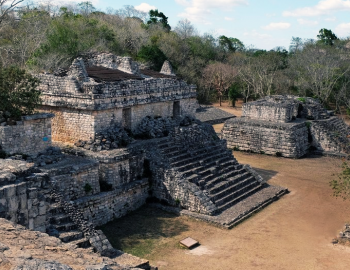
At Ek Balam, restoration has been ongoing since 1997. The Acropolis is the largest restored building, measuring 480 feet across, 180 feet wide and 96 feet tall. This palace has six levels where the governors and higher echelons of the cities population lived. Archaeologists believe that Ek Balam was constructed over time under the authority of succesive leaders.

You can still climb the Acropolis. From the top you can enjoy and unforgettable view of other structures at Ek Balam, as well a two large hills which are two unrestored buildings. We also love that Ek Balam is still relatively unknown and uncrowded.

At the entrance to the Acropolis pyramid there is a monster-like figure that is said to be guarding the entrance to the underworld. Under the thatched roofs that protect the facade, other statues and carvings of angels, animals and various figures are integrated in a complex and beautiful design.

Coba


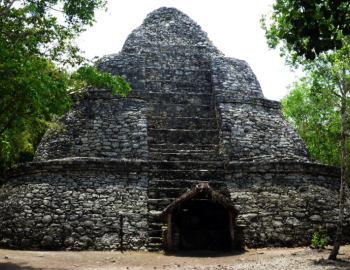
Decidedly unique among Yucatecan archaeological sites, Coba offers a glimpse of the great Mayan cities, grown over by dense jungle, as they must have been seen by the first Europeans to arrive in the New World. Constructed along two lakes, Coba translates to "waters stirred by the wind". Coba, which flourished during Classic Maya Period, (600-900 A.D.) was believed to have had over 50,000 inhabitants.

Coba is the largest archeological zone in the Yucatan, nine square miles, much of which lies covered by green jungle. "Nohuch Mul", the principal structure of Coba, is the tallest pyramid in the Yucatan standing 122 feet.
Coba is located approximately 1 1/2 hours from Akumal. It is absolutely worth seeing. Be sure to bring along insect repellent, good walking shoes and drinking water. You will be doing some hiking. Coba is also an excellent site for bird watching so remember to bring your guidebook and binoculars along as well. We highly recommend that on the way home you take a refreshing swim in the cool clear water of a cenote. There are several easily accessible along the Akumal / Coba route.

The small town near the site has hotels and restaurants for visitors who wish to stay over night.

Travel just a little farther north to the small farming community of Punta Laguna, located on the highway between Coba and Nuevo Xcan, Punta Laguna shares its forest enclave with the endangered spider monkey. Visitors can follow a jungle trail; spot the monkeys swinging from treetops overhead, swim in the lagoon, and even see traditional farming methods and plots. The area surrounding Punta Laguna includes a large inland lake and ecological reserve, which is famous for its abundance of howler and spider monkeys and exotic birds.

Chichen Itza


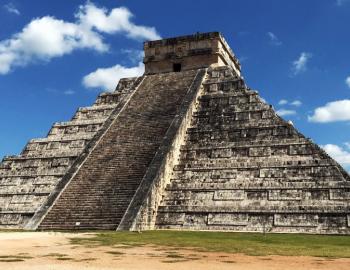
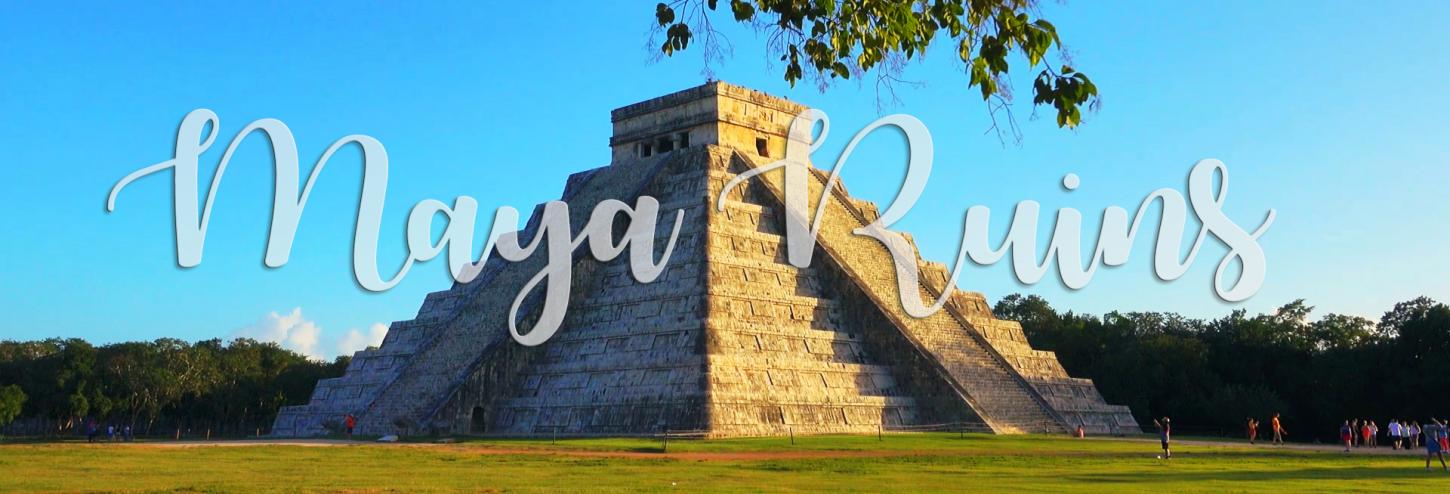
The awe inspiring Maya city of Chichen Itza, offers the best example of Puuc style (a Maya style influenced by the Toltecs) architecture. The magnificence of its buildings and mathematical order of its architectural lines make Chichen Itza one of the most interesting architectural sites in the Yucatan Peninsula. El Castillo, Chichen Itza's most prominent structure stands 100' feet high. 365 steps, representing each day of the year lead up to its crown. Chichen Itza is most famous for the display of light and shadow that occurs every spring and autumn equinox. As the sun strikes the pyramid, a serpent (of light) appears and seems to descend from the crown of the temple down the base of this impressive building where the enormous head of the serpent rests. The serpent withdraws during the course of the day. It is said that this is the cyclical return of the God Kulkulcan who fulfills the annual prophecy to return to visit each year.

Uxmal


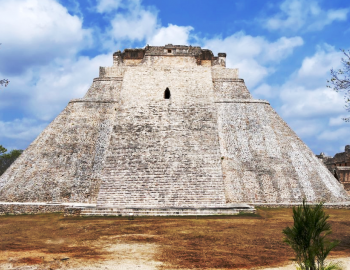
Uxmal is considered by many archeologists to be one of the finest examples of an ancient Maya city. It is also one of the most fascinating and moving to visit. Much detail still remains on the ruins. Between 600-900 AD Uxmal was one of the largest and most important cities of the Yucatan peninsula. At its peak Uxmal was home to approximately 25,000 residents and was the center of much important trade with nearby communities.

“ Uxmal” or “thrice built” in Mayan refers to the construction of Uxmal larges structure, the Pyramid of the Magician. The Maya often build over existing temples. In the case of Uxmal, five layers of construction have been uncovered.
Facilities at the entrance are excellent, with cafeterias, souvenir shops and toilet facilities. There is also a small museum and auditorium. If you arrive early, skip the museum and see the site first before the heat is too uncomfortable.

From Mérida, follow the 261 in the direction of Campeche. The site is about 70 miles (110 km) from Mérida and it should take about an hour by car. The entrance is very well signed from the 261. We recommend hiring a car as the best way to see Uxmal and the other Puuc sites with some flexibility. Otherwise, take a tour from Mérida.